Feminizing HRT
Considering MtF HRT? Learn how estrogen and progesterone work together to feminize your body during your gender transition.
MADE FOR YOU BY
The new trans-owned community platform that gives trusted expert support in your transition and a global friend group to transition alongside.
What is Feminizing HRT?
“Hormone Replacement Therapy” for trans women is the medical process of switching out the Testosterone your body naturally produces with Estrogen.
These hormones are the main drivers of your body developing traditionally masculine or feminine features, so by going through HRT, your body starts to develop the sex characteristics of the opposite sex – in this case, female.
Estrogen and Progesterone
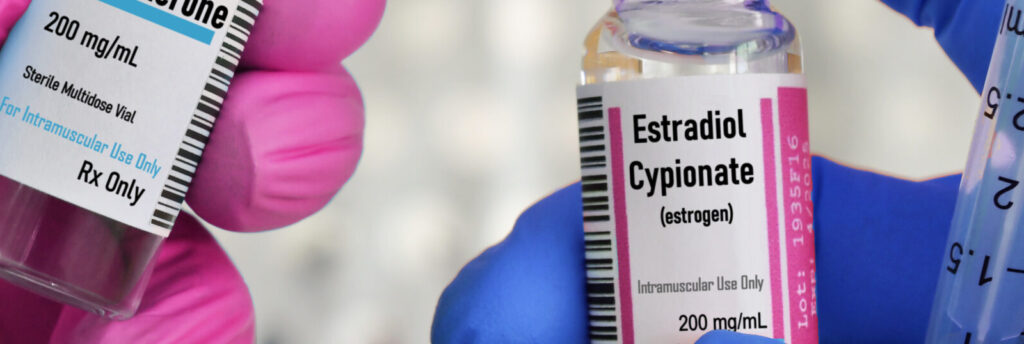
For Women of Transgender Experience, there are two types of hormone therapy methods that work together to subdue the development of testosterone and start the influx of estrogen.
Your doctor will build a blend of hormone blockers (progesterone) and estrogen to strike just the right balance for you. The amount is variable for each person, so make sure to find a doctor you can trust.
Need to find a doctor?
Explore our global database today to find a provider of HRT in your area.
Initial Changes
0-3 Months After Starting
The first few months may feel like a lot of waiting, but foundational changes are already underway. Your body is adjusting to a new hormonal environment as estradiol rises and testosterone falls. This is your recalibration time, where many changes are happening beneath the surface before anything is visible in the mirror.
Decreased sex drive and spontaneous erections
Usually the very first change. Estrogen tells your brain to reduce the hormonal signals that drive testosterone production. As testosterone drops, libido follows.
Skin starts to get softer
Testosterone drives oil production. As it drops, your skin produces less oil. Meanwhile, estrogen stimulates collagen and hydration — the beginnings of softer skin.
Emotional shifts may emerge
Many people report feeling emotions more intensely or crying more easily. Estrogen directly influences serotonin and other mood-related brain chemistry. Notably, gender dysphoria often begins decreasing in this stage, even before visible changes appear.
Want real advice? Join Transgender Zone to get trusted information.
Intermediate Changes
3-6 Months After Starting
This is when feminization starts showing up in the mirror. Your hormone levels have stabilized and estrogen-sensitive tissues are actively responding. Many people describe this as when things start to “feel real.” Note that, depending on your age, these results vary.
Breast development begins
The hallmark change — and the only clearly irreversible effect of feminizing HRT. Estrogen triggers ductal growth in breast tissue, similar to early puberty. You’ll likely feel a small, sometimes tender bud beneath each nipple. Most growth is concentrated in the first six months, though development continues for 2–3 years.
Body fat begins redistributing
Estrogen changes where your body stores fat — directing it away from the abdomen and toward the hips, thighs, and buttocks by altering how fat cells in different areas absorb and release energy. This continues for 2–5 years.
Muscle mass and strength decrease
Testosterone is the primary driver of muscle building. As it drops to female range, your body loses that signal — most people lose 3–5 kg of lean mass over 1–2 years.
Skin becomes noticeably softer and less oily
The subtle changes from Stage 1 become clearly visible now as reduced oil and increased collagen work together.
Testes begin decreasing in size
Without their usual hormonal stimulation, the testosterone-producing cells gradually shrink. This also progressively reduces fertility.
Anxiety and depression may meaningfully improve
Clinical studies show significant reductions in psychiatric symptoms during this period — the combination of brain chemistry changes and the psychological relief of visible feminization appears to work together.
Advanced Changes
6-12 Months After Starting
The rush of new changes gives way to deepening and refining. Everything from earlier stages keeps progressing, and the slowest change — body hair reduction — finally begins. Breast development, fat redistribution, and muscle changes continue progressing toward their respective maximums.
Body and facial hair becomes finer and growth slows
The slowest visible change. Hair follicles cycle over months, and as DHT stays low, androgen-dependent hair gradually thins and lightens. Body hair responds better than facial hair — most people still need electrolysis or laser for the face.
Emotional self-awareness may improve.
Large European studies found reductions in difficulty identifying emotions, social anxiety, and rigid thinking patterns after 12 months — suggesting benefits that go beyond simple mood improvement.
Long-Term Changes
12+ Months After Starting
After year one, feminization becomes a matter of patience. Changes continue at a slower pace, reaching their individual maximums over the next several years.
Breast development reaches its max at 2–3 years
Most transgender women achieve modest size (A–B cup). Studies have found that higher estrogen doses don’t produce larger breasts; adequate testosterone suppression matters more than estrogen level.
Fat redistribution reaches it's max at 2–5 years
The longest-arc change. Month-to-month differences feel subtle, but year-over-year comparisons can be striking.
Long-term mental health benefits are well-supported
A major study in the New England Journal of Medicine found that over two years, appearance satisfaction, positive feelings, and life satisfaction all increased while depression and anxiety decreased. Other large studies have found HRT associated with substantial reductions in suicidal ideation.
Lastly, body and facial hair continues thinning for 3+ years.